How to Eat More Fiber
Add fiber to meals you already make, compare labels when two foods look alike, and build up a little at a time.

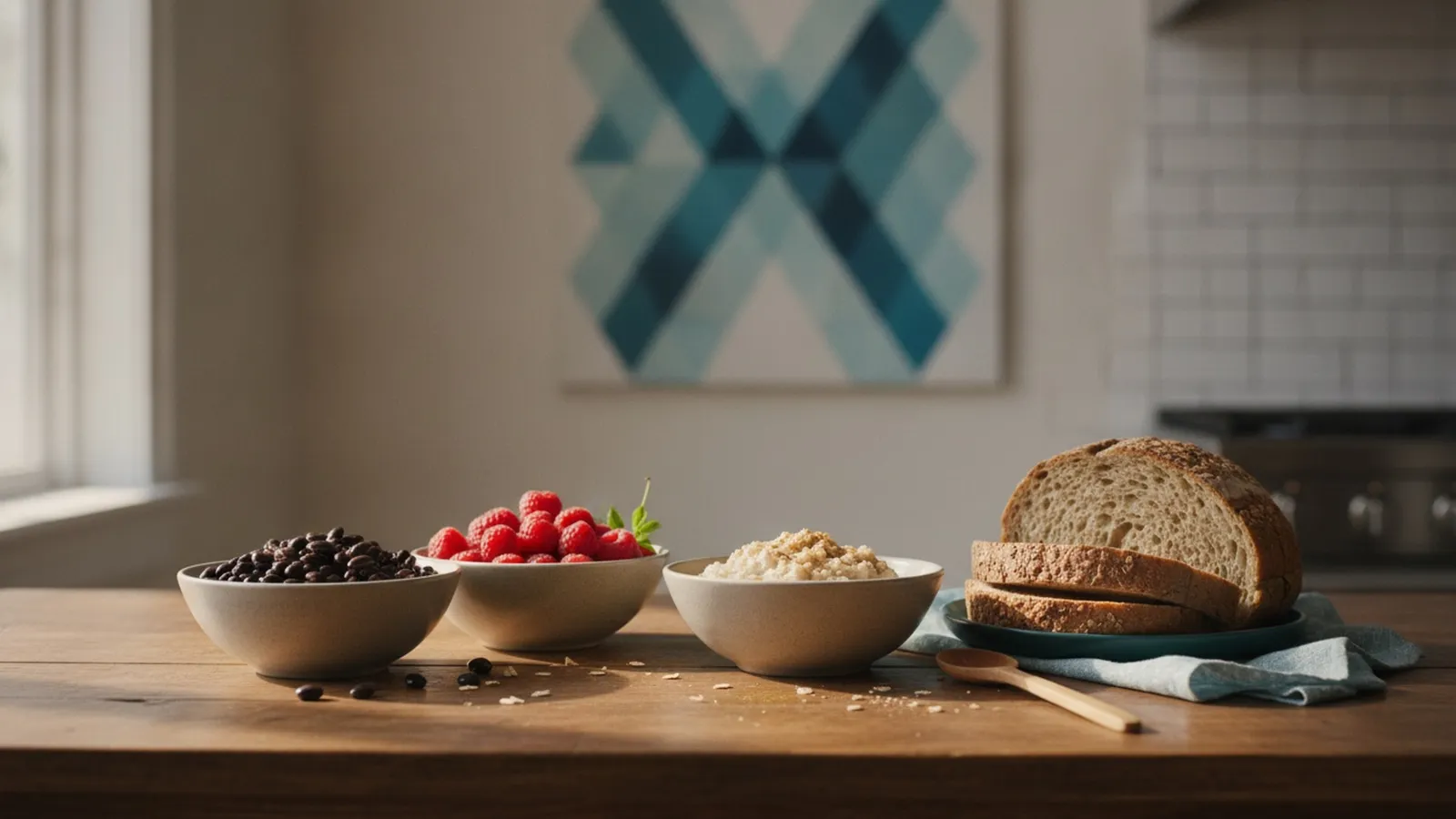
The easiest place to add fiber is a meal you already make. If you usually have cereal, try oats with berries a couple of mornings. If you make soup, stir in white beans. If your lunch is a sandwich, swap in whole-grain bread you actually like. A small change that fits your kitchen can become something you do automatically.
Find the foods you’ll want to repeat
Fiber occurs naturally in foods such as beans, lentils, vegetables, fruit, nuts, seeds, and whole grains. Different foods contribute different kinds and amounts. Think about variety across the week. You might like lentils in a soup and pears at breakfast, while somebody else might reach for bean tacos and popcorn. The foods can look quite different and still contribute fiber. FDA guide to dietary fiber.
Buy a form you’ll use. Canned beans are easy to open on a weeknight. Frozen berries can sit in the freezer until you need them. A bag of rolled oats works for oatmeal or overnight oats. If you shop for one person, a loaf of sliced whole-grain bread can go in the freezer and come out a slice at a time.
Use the label when two options look similar
Check grams of dietary fiber and the serving size. If one cracker label uses a five-cracker serving and another uses ten, the printed numbers compare different amounts. Look at the serving you expect to eat or compare equal weights. If you’re choosing bread or cereal, check the ingredients too. A whole grain such as whole wheat or rolled oats can be listed by name, while the Nutrition Facts panel tells you how much fiber is in a serving. FDA guide to Nutrition Facts.
The U.S. label uses a Daily Value of 28 grams of fiber, based on a 2,000-calorie diet. Use it as context for comparing foods. Your individual needs depend on factors such as age and how much you eat. You can make a worthwhile meal change without working out a number for the whole day. FDA Daily Values.
If you’re choosing between two cereals you enjoy, work through a simple example. One has three grams of fiber in a 30-gram serving. The other has four grams in a 60-gram serving. At equal weights, the first has more fiber. The larger serving of the second still supplies four grams if that’s what you plan to eat. Use the comparison that answers your question. You may care about what you’ll get from breakfast more than which food comes out ahead by weight.
Add a little at a time
If you currently eat little fiber, try one addition and give yourself time to see how you feel. You might add a small scoop of beans to lunch on a few days. Once that fits, add fruit to breakfast or try a whole-grain swap. Drinking enough fluids helps fiber do its work. People who follow a medically prescribed diet or have been told to limit fiber should check what changes suit them before increasing it. NIDDK guidance on eating and fiber.

Suppose your usual lunch is leftover rice with vegetables. On Monday, open a can of chickpeas and add some to the bowl. Use the rest in a salad the next day or stir them into a soup. That one purchase gives you two chances to see whether you like the taste and how the meals sit with you. If chickpeas become something you look forward to, keep a can handy. If you prefer lentils or another bean, use that next time.
Start at the next grocery trip
Write down one breakfast you repeat and one dinner you expect to make this week. For breakfast, pick a change that takes almost no extra time, such as adding a pear or choosing a higher-fiber cereal you enjoy. For dinner, choose one addition you can use again before it goes to waste. After a week, keep the change that made the meal better. That gives you somewhere to start when you want to add another.
Sources
- U.S. Food and Drug Administration, Dietary Fiber, How to Use the Nutrition Facts Label, and Daily Values.
- National Institute of Diabetes and Digestive and Kidney Diseases, Eating, Diet, and Nutrition for Constipation.