Strength Training for Beginners
A beginner’s first strength workout with a chair, a wall and a light band: reps, sets, controlled effort and what to change next time.

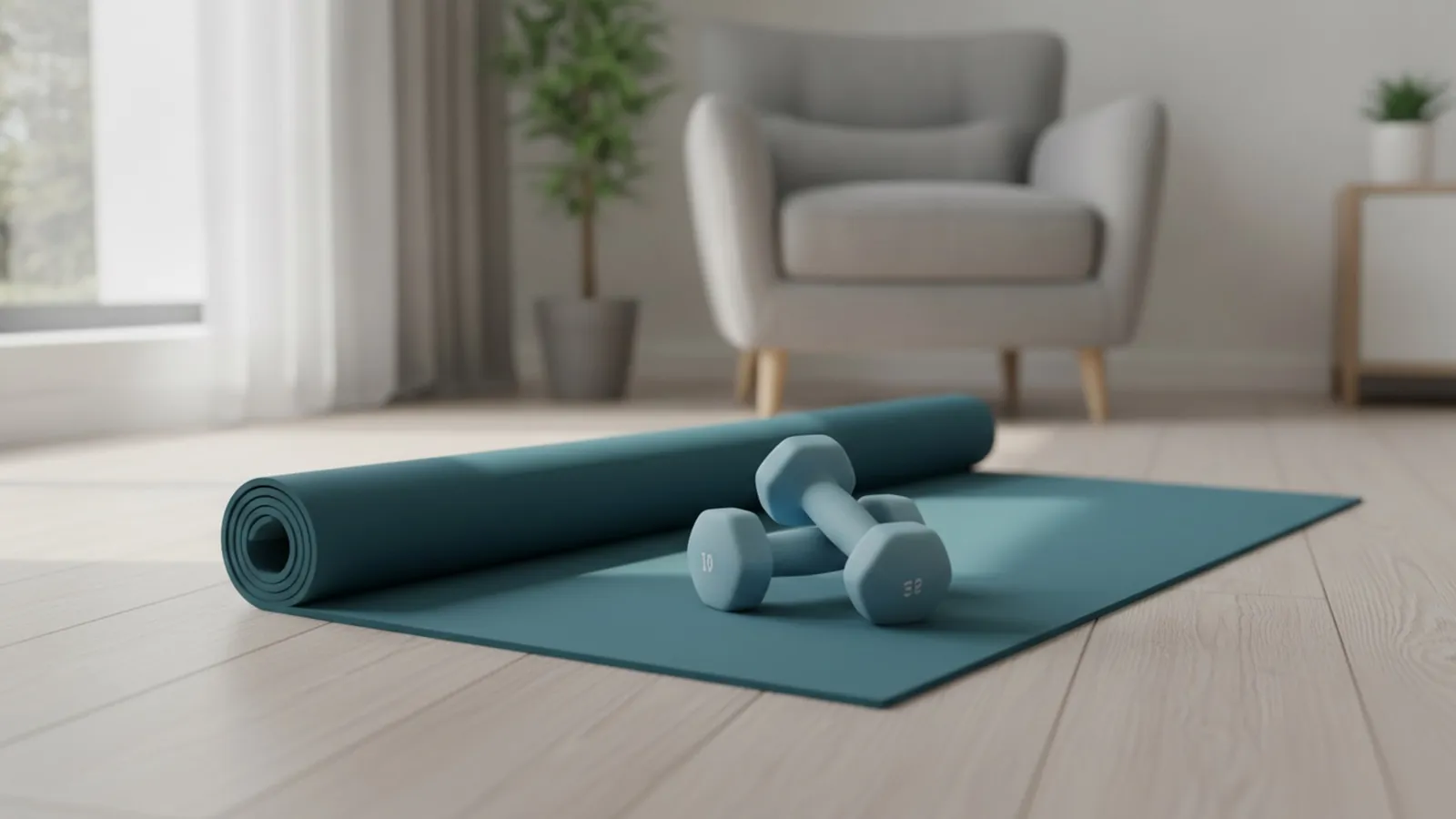
Your first strength workout can be as simple as standing up from a chair, pushing against a wall, and learning how to pull a light resistance band. Take time to find versions you can control and remember the next time. You can add difficulty once the movements feel familiar.
Repetitions, sets, and resistance
One repetition, or rep, is one complete movement. Standing up from a chair and sitting back down is one rep. Several reps in a row form a set. After a set, take a break long enough to feel ready to try the movement again.
Resistance is whatever your muscles are working against. In a chair stand, it’s largely your body weight. In a rowing exercise, it might be a band or dumbbell. You can make a wall push-up easier by standing closer to the wall and harder by moving a little farther back, as long as your feet stay secure and you can control the movement.
The American College of Sports Medicine’s 2026 review found that home routines, bands, and body-weight exercises can all help build strength. It emphasizes regular training of the major muscle groups for healthy adults. ACSM resistance training guidance.
Choose an effort you can control
Start with a resistance that lets you move smoothly and breathe through the exercise. The work should feel like work toward the end of the set. As you learn, finish while you still feel capable of a few more repetitions with the same control. ACSM’s review found that training all the way to the point where you cannot complete another repetition did not consistently improve results for the average healthy adult. ACSM resistance training guidance.
If you find yourself swinging a weight, losing your balance, or rushing to get through a movement, try a simpler version or reduce the resistance. For an unfamiliar exercise, a qualified trainer can help you see what’s happening in a way a mirror or video may miss.
Try a short first session
After a few minutes of easy movement, try one set of each exercise below. Five to eight repetitions is a practical trial for the first session. Take a comfortable break between exercises. Treat the numbers as a starting example you can adjust.
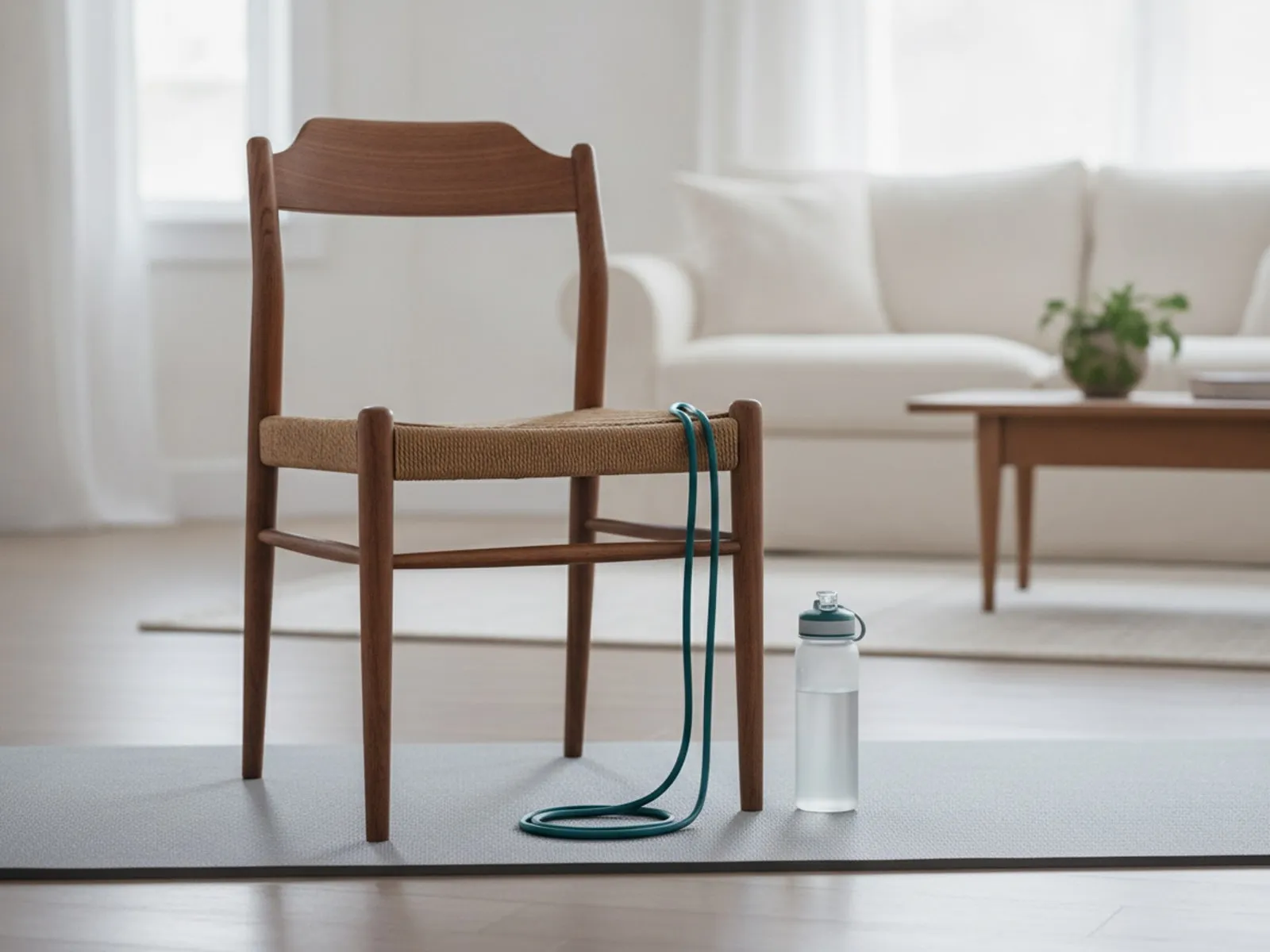
- Chair stand. Sit in a solid chair without wheels, placed so it won’t slip, with your feet flat. Lean slightly forward, stand up, and sit down slowly. Use a higher seat or light hand support if you need it.
- Wall push-up. Place your hands on the wall at about chest height. Keep your back straight as you bend your elbows to move closer, then press gently away.
- Row. Brace one hand against a sturdy support and keep your back flat. With a light dumbbell in the other hand, pull the weight toward your side without twisting. Repeat on the other side. If you use a band, follow its setup instructions and use a secure anchor designed for it.
- Heel raise. With your hands lightly on a stable support, lift both heels slowly, then lower them. Keep the range comfortable.
If a particular exercise causes sharp pain, stop that movement. Where an injury, recent surgery, or a health condition affects what you can do, get advice about suitable exercises and resistance before using the routine.
Give yourself time to learn the setup, especially when you switch equipment. If you try a dumbbell row first, choose a weight you can lift smoothly with either arm. If you only have a wall and a chair today, get familiar with those exercises and practice the row when you have the right equipment. Keeping track of the version you used is more useful at this stage than comparing how much you could lift against somebody else’s starting point.
Give the next session a starting point
Write down the exercise versions you used and the reps that felt controlled. A note such as “wall push-up, six, comfortable” tells you enough. Next time, begin with those same versions. Once the work feels familiar, choose one movement to make a little harder, perhaps by adding a repetition or using slightly more resistance.
U.S. guidelines recommend muscle-strengthening work for all major muscle groups at least twice a week. A short first session teaches you the movements. As you settle in, plan two days when you can give legs, hips, back, abdomen, chest, shoulders, and arms some attention. CDC adult activity guidelines.
Sources
- American College of Sports Medicine, 2026 resistance training position stand summary.
- Centers for Disease Control and Prevention, Adult Activity: An Overview.
- NHS, Strength exercises.
- American Council on Exercise, Single-arm row.