Two Days of Strength Training at Home
A simple two-day home strength routine with a chair, a wall and a band, with form cues and how to set your starting point.

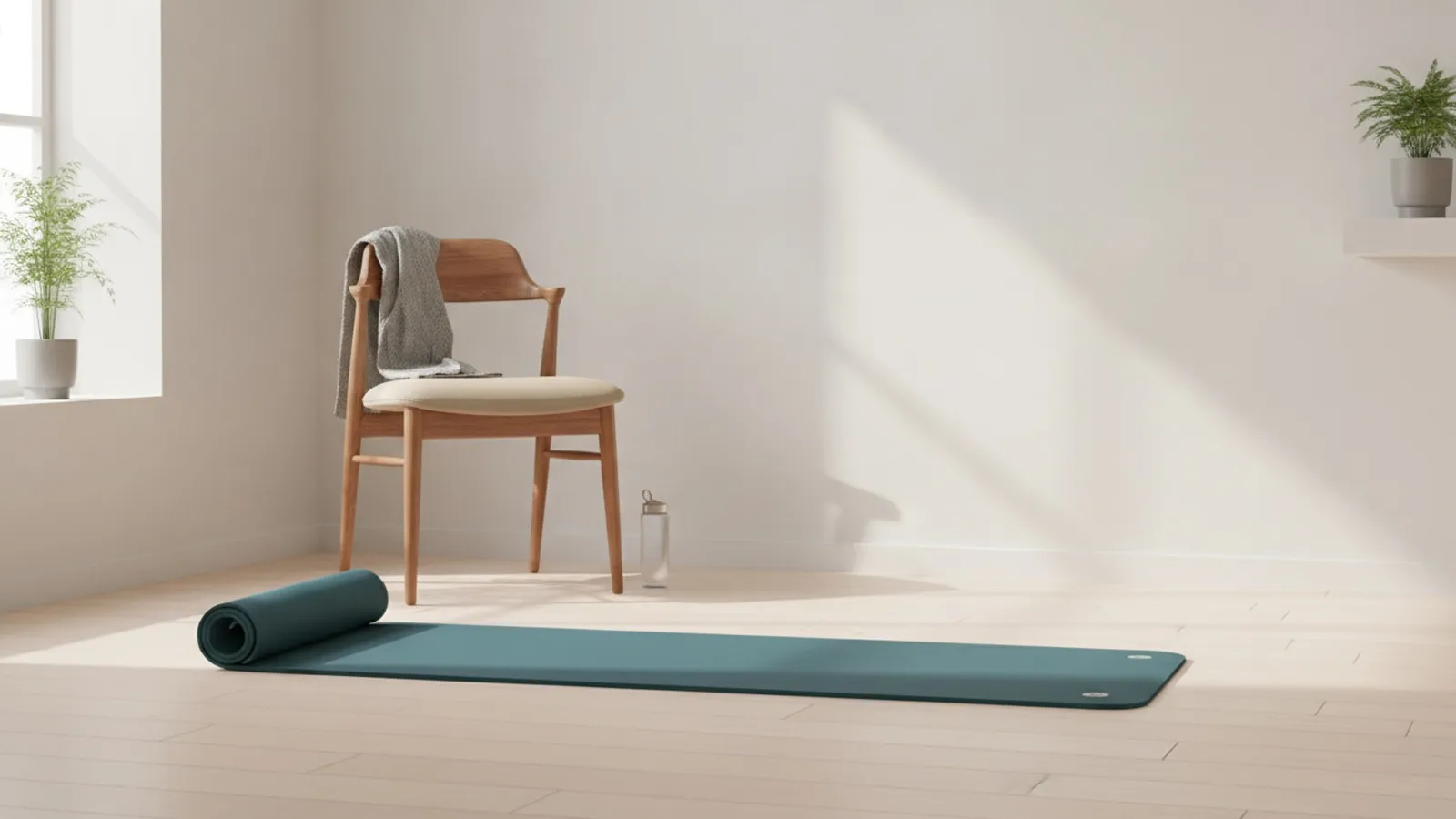
Put two strength sessions on days you’re usually home and give them the same shape. Tuesday and Friday could work, or you might have more room on Wednesday and Sunday. As a beginner, repeating the same movements lets you spend more of the session doing them and less of it remembering what comes next.
Set up once for both days
Clear enough room to take a step and move your arms freely. Set a sturdy chair without wheels against a wall so it stays in place, and have a light dumbbell or resistance band ready for the pulling exercise. A wall or sturdy counter gives you a surface for push-ups. If you use a band, inspect it for wear and use it as directed by the manufacturer, including any instructions for anchoring it.
Begin with a few minutes of easy movement. Then try one set of five to eight controlled repetitions for each exercise as an introductory session. This is an example you can adjust. Take a pause between exercises, long enough to regain a comfortable breathing pace. Current resistance-training guidance supports home routines with bands, weights, or body weight. American College of Sports Medicine.
Use this routine on both days
| Exercise | How to begin | One way to adjust it |
|---|---|---|
| Chair stand | Lean slightly forward, stand from the chair, then sit back down slowly. | Use a higher seat or light hand support to make the movement easier. |
| Wall push-up | Place your hands on the wall at about chest height. Keep your back straight as you bend your elbows and press back. | Move a little closer to the wall for less resistance. |
| Supported row | Brace one hand on a sturdy surface and keep your back flat. With a light dumbbell in the other hand, bring your elbow toward your side without twisting, then lower the weight with control. Do both sides. | Use a lighter weight or a suitable band set up according to its instructions. |
| Hip hinge | With your knees slightly bent and your hands on your hips, keep your back straight as you send your hips back a little. Squeeze your glutes to return upright. | Use a shorter range while you learn the movement. |
| Heel raise | Hold a stable support and slowly lift both heels, then lower. | Keep both feet down between reps and reset your stance if needed. |
| Standing abdominal brace | Stand comfortably and gently tighten your midsection while breathing normally. Relax and repeat. | Use a chair for support if standing without it is difficult. |
Start with a range you can manage comfortably. Stop a movement if you feel sharp pain. If a recent injury, operation, or health condition affects which exercises you can do, a physical therapist or other qualified professional can help adapt the plan. NHS strength exercise examples, CDC guidance on activity with chronic conditions or disabilities.
Use the second day to confirm your starting point
On Day 1, write down the version of each exercise and the number of repetitions you completed with control. On Day 2, repeat it. If a movement felt awkward, try the simpler version first. A useful sign of progress early on is knowing how to position yourself and move smoothly.
Over the following weeks, add a repetition to one or two exercises once the current amount feels manageable. Later you might add a second set or a small amount of resistance. Change one thing at a time. A short log such as “Friday, wall push-up, 8, comfortable” lets you see changes that would otherwise be easy to miss.
The U.S. adult guidelines call for muscle-strengthening work on at least two days a week, covering all major muscle groups. Use these sessions to build toward that broader routine. If a week gets crowded, use a shorter session with the movements you know best and return to the full sequence at the next opening. CDC adult activity guidelines.
Keep the setup in your log. Record details that change the exercise. “Used the taller dining chair” tells you which seat height you used. “Hands at the same marks on the wall” makes it easier to start the push-up in a familiar position. If you switch to a lower chair or move farther from the wall next week, put that in the log, too. The reps can stay the same while the work gets harder.
Sources
- American College of Sports Medicine, 2026 resistance training position stand summary.
- Centers for Disease Control and Prevention, Adult Activity: An Overview and Chronic Conditions and Disabilities Activity.
- NHS, Strength exercises.
- American Council on Exercise, Hip hinge and single-arm row.